


How diet and personalised nutrition can help these and high histamine conditions.

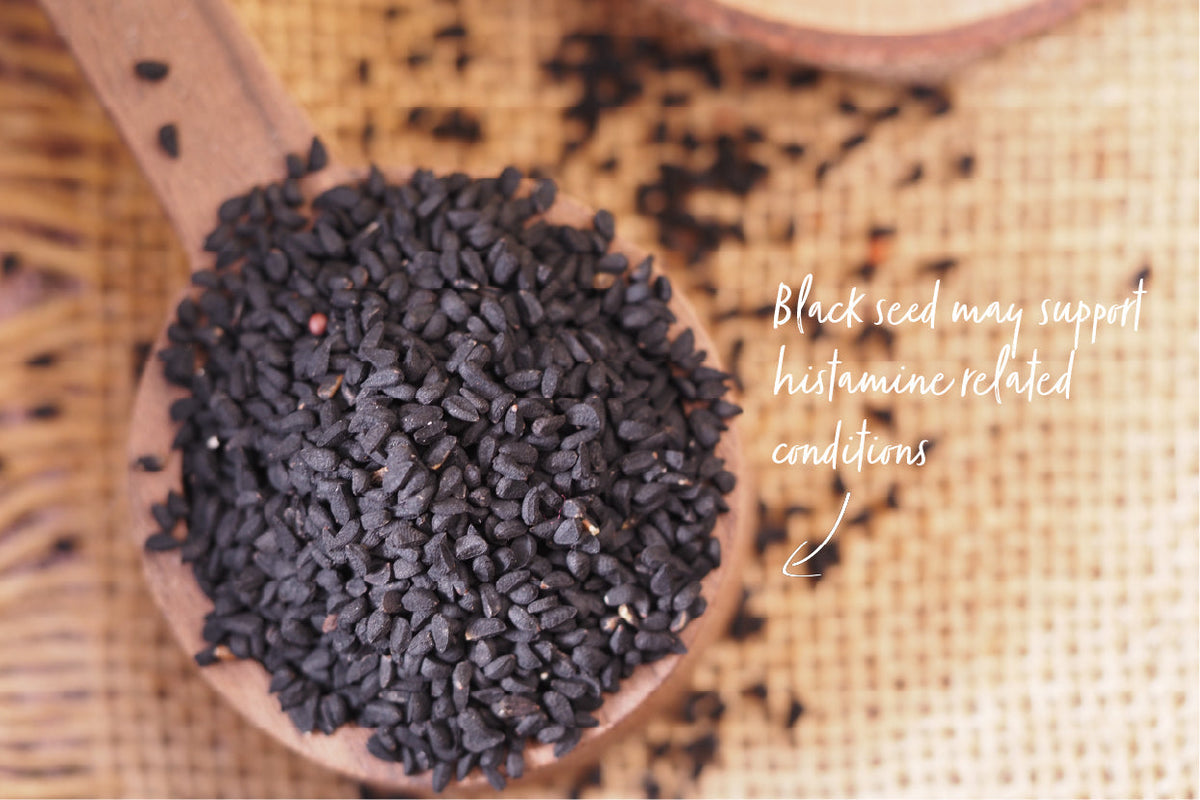
Research shows black seed may support histamine related conditions
What is histamine?
Mast cells are immune cells found all around the body in almost every organ. Mast cells are part of the innate and adaptive immune system, releasing anti-inflammatory mediators, including histamine. Histamine induces white blood cell activation and movement, tightening of the airway muscles, and increased vascular permeability. [1] Histamine is an important regulator of intestinal homeostasis; it promotes the rapid excretion of potentially toxic substances. [2] Histamine is more well known for its involvement in allergic reactions, where the immune system mistakenly identifies a harmless substance as a threat, such as pollen for hay fever. [3] it can be found in foods and drinks, such as fish, dairy, meats, fermented vegetables, and soy products, and alcoholic beverages. [4]
What is Histamine intolerance/Mast Cell Activation Syndrome/ High Histamine?
High levels of histamine can cause allergy like symptoms across the whole body, affecting the skin (presenting as hives, redness etc), digestive tract, cardiovascular system (irregular heartbeats), as well as more general symptoms such as headaches, nasal issues (congestion and runny nose), fatigue and dizziness. [5] High histamine has several causes including consuming large amounts of high histamine foods or alcohol, taking medications that inhibit histamine breakdown, having histamine intolerance, and Mast Cell Activation Syndrome.
Histamine intolerance is a disorder associated with an inability to metabolise ingested or dietary histamine. [6] It is thought to be caused by a deficiency of the gastrointestinal enzyme diamine oxidase (DOA), which aids with the breakdown and/or absorption of dietary histamine. [7] Damaged intestinal mucosal lining seen in Inflammatory Bowel Disease, Coeliac and increased intestinal permeability or ‘leaky gut’ is also linked to DOA deficiency [6]. Disrupted gut microbiome may also play a role [16].
Mast Cell Activation Syndrome is a dysfunction of mast cells causing them to release chemical substances called mediators, which are involved in the allergic response, including histamine, to triggers that are normally harmless. [8] Once thought to be a rare condition, with growing research and recognition, the condition is being more easily identified and therefore, managed. [9]
How can you manage this?
There are some nutrients that may help support histamine release and related conditions, including hay fever, histamine intolerance, and asthma.
Black seed, also known as Nigella sativa, is a flowering plant that has been used traditionally for centuries. There is evidence for black seed providing anti-inflammatory effects to the body, as well as immune-modulating effects, which may help support histamine related conditions. [10]
Quercetin is a polyphenol commonly found in vegetables such as onions, broccoli, fruits, some herbs, tea and wine. Quercetin is known for its antioxidant activity in radical scavenging and anti-allergic properties. Quercetin also inhibits the production and release of histamine so may be beneficial for supporting mast cell activation syndrome. [11]
Deficiency or low intake of some nutrients is associated with higher histamine levels. Vitamin C depletion is associated with higher concentrations of histamine in the blood. [12] It has been found in research using human cells that vitamin C may be able to stabilise mast cell degradation and therefore reduce histamine release. [13] Similarly, Zinc and Magnesium have both been associated with having inhibitory effects on mast cells and reducing histamine release. Inadequate intake of these minerals is associated with higher histamine release by mast cells. [14] [15]
Diet and lifestyle can play an important role in histamine levels management. Avoid eating high histamine foods such as aged cheeses, smoked and cured meats, tinned fish and fermented foods including beer and red wine. As well as this, limit histamine releasing foods such as tomatoes, spinach, avocados, chocolate and citrus fruits. Everyone will have different tolerance levels and trigger foods so experimentation and exclusion diets may be needed to determine this. Focusing on fresh foods may help as fresh meats and vegetables are lower in histamine. Making sure the diet contains enough fibre also helps to support the health of the intestinal lining and the microbiome.
Additionally, managing stress may also help. Acute or prolonged stress can increase the release of histamine in the gut. Stress management techniques, such as breathing exercises, yoga, and regular exercise may help. Furthermore, managing conditions that are caused or exacerbates by histamine, including asthma, may help support histamine intolerance.
In conclusion
Histamine release is an important biological function; however, dysregulation can cause potential health issues. Histamine intolerance and Mast Cell Activation Syndrome can be uncomfortable to live with so ensuring you are getting the right nutrients and managing your lifestyle may help you feel more comfortable.
Author: Will Jordan, BSc (Hons) MSc, is a Nutrition Advisor at Viridian Nutrition. He holds a Master’s degree in Sports and Exercise Nutrition, BSc in Food and Nutrition.
References
[1] Patel RH, & Mohiuddin SS. Biochemistry, Histamine. StatPearls. 2023. [online] Available from <https://www.ncbi.nlm.nih.gov/books/NBK557790/> [24/11/2025]
[2] Shulpekova YO, Nechaev VM, Popova IR, Deeva TA, Kopylov AT, Malsagova KA, Kaysheva AL, & Ivashkin VT. Food Intolerance: The Role of Histamine. Nutrients. 2021; 13 (9) 3207
[3] White MV. The role of histamine in allergic diseases. Journal of Allergy and Clinical Immunology. 1990; 86, (4) 599-605
[4] Rai KP, Pradhan HR, Sharma BK, & Rijal SK. Histamine in Foods: Its Safety and Human Health Implications. Journal of Food Science and Technology Nepal. 2013; 8, 1-11
[5] Jochum C. Histamine Intolerance: Symptoms, Diagnosis, and Beyond. Nutrients. 2024; 16 (8) 1219
[6] Comas-Basté O, Sánches-Pérez S, Veciana-Nogués MT, Latorre-Moratalla M, & del Carmen Vidal-Carou M, Histamine Intolerance: The Current State of the Art. Biomolecules. 2020; 10 (8) 1181
[7] Schnedl WJ, & Enko D. Histamine Intolerance Originates in the Gut. Nutrients. 2021; 13 (4) 1262
[8] Özdemir Ö. Kasimoğlu G, Bak A, Sütlüoğlu, & Savaşan S. Mast cell activation syndrome: An up-to-date review of literature. World Journal of Clinical Pediatrics. 2024; 13 (2) 92813
[9] Afrin LB, Butterfield JH, Raithel M, & Molderings GJ. Often seen, rarely recognised: mas cell activation disease – a guide to diagnosis and therapeutic options. Annals of Medicine. 2016; 48 (3) 190-201
[10] Işik H, Cevikbaş A, Gürer ÜS, Kiran B. Potential Adjuvant Effects of Nigella sativa Seeds to Improve Specific Immunotherapy in Allergic Rhinitis Patients. Medical Principles and Practice. 2010; 19 (3) 206-211
[11] Mlcek J, Jurikova T, Skrovankova S, & Sochor J. Quercetin and Its Anti-Allergic Immune Response. Molecules. 2016; 21 (5) 623
[12] Johnston CS, Solomon RE, & Corte C. Vitamin C depletion is associated with alterations in blood histamine and plasma free carnitine in adults. Journal of the American College of Nutrition. 1996, 15 (6) 586-591
[13] Kazama I, Sato Y, & Tamada T. Pyridoxine Synergistically Potentiates Mast Cell-Stabilising Property of Ascorbic Acid. Cellular Physiology and Biochemistry. 2022; 56, 282-292
[14] Sanada S, Kuze M, & Yoshida O. Beneficial effect of zinc supplementation on pruritus in haemodialysis patients with special reference to changes in serum histamine levels. Hinyokika Kiyo. 1987; 33 (12) 1955-1960
[15] Mureşan D, Oană A, Nicolae I, Alecu M, Moşescu L, Benea V, & Flueraş M. Investigations of magnesium, histamine and immunoglobulins dynamics in acute urticaria. 1990; 49 (1) 31-35
[16] Sánchez-Pérez S, Comas-Basté O, Duelo A, Veciana-Nogués MT, Berlanga M, Latorre-Moratalla ML, Vidal-Carou MC. Intestinal Dysbiosis in Patients with Histamine Intolerance. Nutrients. 2022 Apr 23;14(9):1774.
For more information about diet, supplements and lifestyle advice visit your local independent health store. To find your nearest one, visit www.findahealthstore.com.
The information contained in this article is not intended to treat, diagnose or replace the advice of a health practitioner. Please consult a qualified health practitioner if you have a pre-existing health condition or are currently taking medication. Food supplements should not be used as a substitute for a varied and balanced diet.


